The Neuroticism Spectrum: What High, Low, and Middle Scores Can Mean
The neuroticism spectrum is a simple way to understand a complex personality trait: people differ in how strongly they notice, react to, and recover from stress. In the Big Five model, neuroticism sits beside openness, conscientiousness, extraversion, and agreeableness as one of the five broad personality dimensions. It is not a moral flaw, and it is not automatically a disorder. It is a continuum of emotional sensitivity. If you want a structured way to reflect on where you may fall, an educational neuroticism self-check can help you organize your observations without treating a score as a clinical label.

What the Neuroticism Spectrum Measures
Neuroticism describes a tendency toward emotional reactivity. A person higher on the spectrum may notice threats quickly, worry longer, replay tense conversations, or feel physical stress sooner. A person lower on the spectrum may stay calmer under pressure, recover faster from setbacks, or need stronger signals before feeling concerned. Most people are somewhere in the middle, and the middle is often where context matters most.
The word itself can sound harsher than the concept. The common neuroticism pronunciation is close to "new-ROT-uh-siz-um" or "nyoo-ROT-uh-siz-um," depending on accent. In everyday searches, people also ask about a neurotic definition, neurotic behavior, or what it means to have a neurotic personality. In modern personality psychology, the useful point is not the label "neurotic." The useful point is the pattern: how often emotional alarms turn on, how intense they feel, and how easily they settle.
High neuroticism can involve frequent worry, sensitivity to criticism, mood shifts, or strong anticipation of things going wrong. Low neuroticism can involve steadiness, but it can also mean a person underestimates emotional warning signs or seems detached in situations where others expect concern. The spectrum view keeps both sides balanced.
High, Middle, and Low Neuroticism in Daily Life
Thinking in levels helps, but the boundaries are not fixed boxes. Two people can both score high and still look different. One may appear tense and vocal. Another may seem composed while privately ruminating. Likewise, a low score does not mean someone never feels anxious, sad, or stressed. It means those reactions may be less frequent, less intense, or shorter-lived.
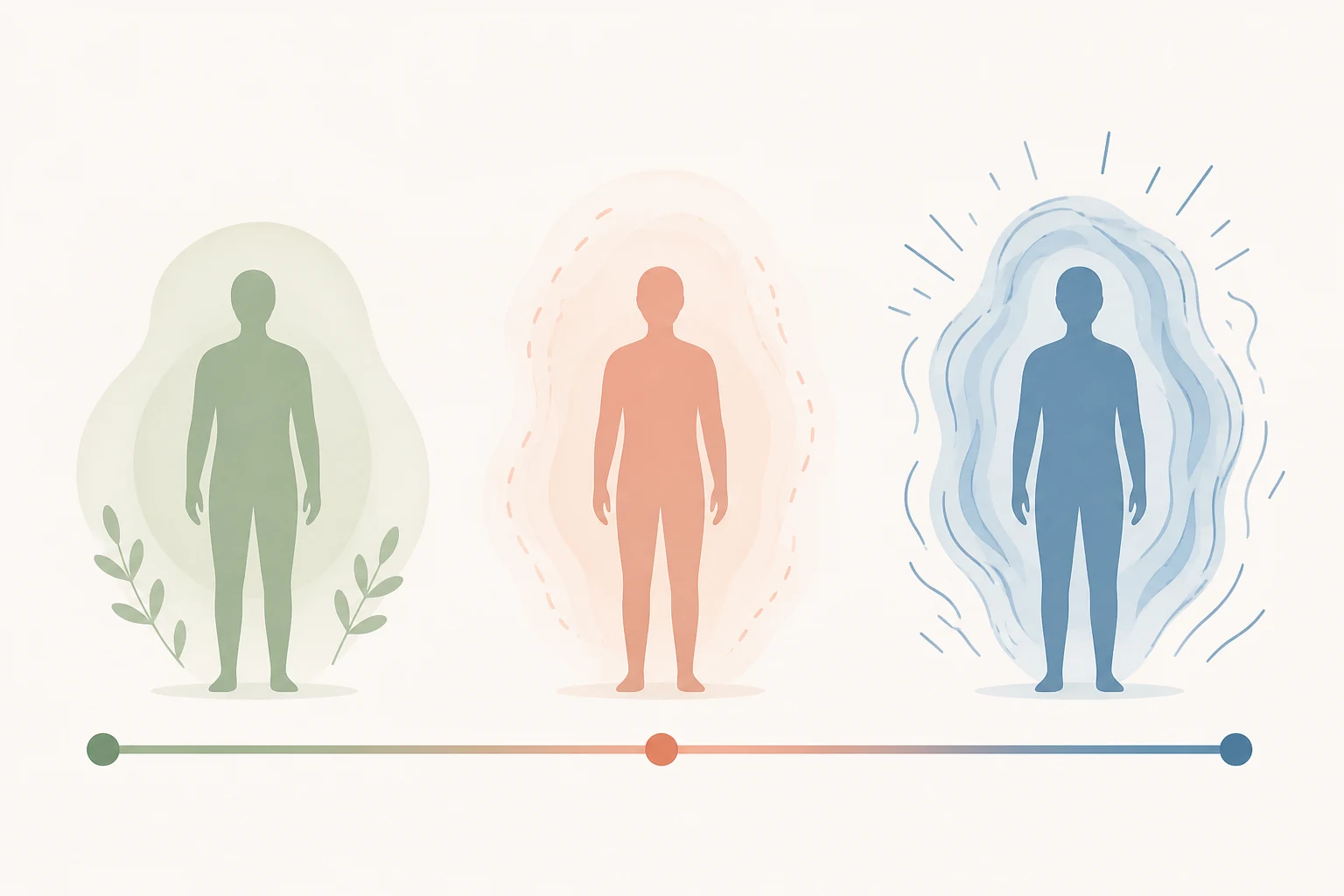
Here is a practical way to read the range:
Low neuroticism often looks like steady recovery. You may be able to pause, reframe, and move forward after friction. The possible blind spot is that you may minimize discomfort, delay important conversations, or miss early signs that stress is building.
Moderate neuroticism often looks flexible. You may worry in uncertain situations but still return to baseline. You may benefit from planning, reassurance, and reflection without feeling controlled by those needs.
High neuroticism often looks like strong signal detection. You may spot risks before others, care deeply about outcomes, and prepare carefully. The possible cost is that your mind may keep scanning after the useful planning window has passed.
This is why the question "is neuroticism bad?" needs a careful answer. It can feel uncomfortable when it is high, but the trait also carries information. Sensitivity can support empathy, preparation, conscientious problem-spotting, and honest self-awareness. The goal is not to erase emotion. The goal is to understand when emotional sensitivity helps and when it overloads daily life.
Is Neuroticism a Disorder?
Neuroticism is a personality trait, not a disorder by itself. It belongs to the Big Five framework, sometimes called the five-factor model or OCEAN personality model. "Big 5 neuroticism" refers to the emotional stability side of that model. A trait score can describe tendencies, but it cannot replace a mental health evaluation, and it should not be used to label yourself as broken.
That distinction matters because some searches connect neuroticism with anxiety, neurosis, or older terms such as anxiety neurosis. "Neurosis" is a historical term, while current mental health care uses more specific categories and professional assessment. Someone can be high in neuroticism without having an anxiety disorder. Someone can also have significant anxiety symptoms for reasons that go beyond personality.
If emotional distress is intense, persistent, or interfering with sleep, work, relationships, safety, or daily functioning, it is wise to speak with a qualified professional. A personality article or online self-reflection tool can support vocabulary and awareness, but it should not be treated as a substitute for care.
What Causes Neuroticism?
The causes of neuroticism are usually mixed. Research on personality points to both genetic influence and environmental shaping. That means "is neuroticism genetic?" has a yes-and answer: inherited temperament can matter, but life experience, stress exposure, attachment history, coping skills, health, sleep, and social support can also influence how the trait shows up.
Think of the spectrum as a baseline plus a current state. Baseline is your usual emotional pattern across time. Current state is what happens when deadlines, conflict, uncertainty, illness, or major change push your nervous system harder than usual. A person with a moderate baseline may look highly reactive during a difficult season. A person with a high baseline may feel more balanced after building supportive routines.
This flexibility is important. Personality traits tend to be relatively stable, but stable does not mean frozen. People can learn how to notice triggers earlier, reduce rumination, ask for support, and build recovery practices. Change often looks less like becoming a different person and more like getting better at working with your own signals.
How to Read Neurotic Behavior Without Over-Labeling It
Neurotic behavior is best understood as a pattern, not a character judgment. Examples may include repeated checking, overthinking a neutral comment, expecting criticism, needing extra reassurance, or feeling unusually shaken by small setbacks. These behaviors can be attempts to create safety, certainty, or control.
Before calling yourself or someone else neurotic, ask three better questions:
- What emotion is the behavior trying to manage?
- What situation tends to trigger it?
- What would a calmer response look like without dismissing the concern?
This keeps the focus on observation. It also prevents the word "neurotic" from becoming an insult. A neurotic personality, in the everyday sense, is often someone whose worry system is highly active. But people are not reducible to one trait. The same person may also be warm, thoughtful, creative, careful, loyal, or deeply responsible.

How to Deal With High Neuroticism Constructively
If you believe you are high on the neuroticism spectrum, the first step is not self-criticism. It is mapping. You want to know which situations activate you, what thoughts arrive first, what your body does, and what helps you return to baseline.
Try a simple four-part reflection for one week:
Trigger: What happened right before the reaction?
Signal: What did you notice in thoughts, emotions, or body sensations?
Story: What did your mind predict or assume?
Support: What helped, even slightly, after the reaction?
Patterns usually become clearer after several entries. You may discover that uncertainty is harder than conflict, that sleep changes your threshold, or that reassurance helps only briefly while problem-solving helps longer. This kind of record can make a Big Five emotional stability test more meaningful because you are comparing a score with real-life examples instead of treating it as a fixed identity.
Useful coping skills are often boring in the best way: sleep consistency, movement, breathing practice, balanced routines, fewer late-night spirals, and honest conversations. Cognitive reframing can help when a worry is exaggerated. Planning can help when a worry is realistic. Support from others can help when your mind keeps looping. Professional support can help when distress feels hard to manage alone.
Using the Neuroticism Spectrum for Self-Reflection
The most helpful use of the neuroticism spectrum is not ranking yourself. It is building a more accurate map of your emotional life. A score, article, or journal entry can become a starting point for questions such as: When am I most reactive? What do I recover from quickly? Which worries protect me, and which ones repeat without helping?

If your result or self-observation suggests high neuroticism, you can treat that as information about sensitivity and recovery needs. If it suggests low neuroticism, you can still ask whether you notice emotions early enough and whether others experience you as responsive. If it suggests a middle range, you can look for the contexts that pull you upward or downward.
For a low-pressure next step, use a few recent situations as evidence. Pick one stressful moment, one ordinary disagreement, and one situation that went better than expected. Compare how quickly you reacted, what you assumed, and how long recovery took. Then, if useful, reflect on your own neuroticism patterns with an educational tool that keeps the focus on self-awareness rather than judgment.
FAQ
What is a neurotic person like?
A neurotic person, in everyday language, is often someone who worries easily, reacts strongly to stress, or spends more time anticipating problems. In a personality context, it is more accurate to say the person may be higher in neuroticism. That wording is less judgmental and more useful because it describes a tendency rather than a whole identity.
Is neuroticism a disorder?
No. Neuroticism is a Big Five personality trait, not a disorder by itself. High neuroticism can overlap with emotional distress, but a trait score cannot determine whether someone has a mental health condition. If distress is persistent or disruptive, professional support is the right place to get individualized guidance.
What is Big 5 neuroticism?
Big 5 neuroticism is the emotional reactivity and emotional stability dimension within the Big Five personality model. The other broad traits are openness, conscientiousness, extraversion, and agreeableness. A higher score usually points to stronger stress sensitivity, while a lower score usually points to steadier emotional recovery.
Is neuroticism bad?
Not automatically. High neuroticism can feel difficult when worry, rumination, or sensitivity becomes exhausting. It can also bring strengths such as careful planning, empathy, and early risk detection. The key question is whether the trait is helping you respond wisely or keeping you stuck in repeated stress loops.
What causes neuroticism?
Neuroticism appears to be shaped by both inherited temperament and life experience. Stress, sleep, relationships, coping habits, and personal history can all influence how strongly the trait shows up. This is why people may feel more reactive during difficult periods and more steady when support and routines improve.
Is anxiety neurosis a type of anxiety disorder?
"Anxiety neurosis" is an older term and is not the usual language used in current mental health care. Today, professionals use more specific assessment categories and individualized evaluation. If anxiety symptoms are interfering with daily life, it is better to seek professional guidance than to rely on older labels.
How do you deal with high neuroticism?
Start by observing patterns instead of blaming yourself. Track triggers, body signals, recurring thoughts, and what helps you recover. Then build practical supports such as sleep routines, movement, reframing, problem-solving, and trusted conversation. If distress feels intense or hard to manage, consider speaking with a qualified professional.