Lower Neuroticism: Proven Strategies for Emotional Resilience
Do you often find yourself caught in cycles of worry, anxiety, or frequent mood swings? Do you feel that your emotional reactions are sometimes stronger than a situation warrants? If so, you might have wondered: Are these feelings a permanent part of who I am, or is real change possible?
The great news is that you are not stuck. While a tendency toward experiencing negative emotions—a trait known as neuroticism—can feel overwhelming, it is not a life sentence. This guide delves into science-backed, practical strategies to help you understand this trait, actively work towards reducing its intensity, and build lasting emotional resilience.
Improving your well-being starts with self-awareness. Discovering your baseline with our free neuroticism test can be the empowering first step toward a calmer, more stable you.
Understanding Neuroticism's Malleability: Can You Change?
Before diving into strategies, it's crucial to address a fundamental question: can personality traits like neuroticism actually change? For a long time, personality was seen as fixed. However, modern psychology and neuroscience tell a more hopeful and dynamic story. Change is not only possible but achievable with consistent effort.
What Neuroticism Is (and Isn't) in the Big Five Personality Traits
First, let's clarify what neuroticism means. In psychology, it's one of the "Big Five" personality traits, a widely accepted model for understanding human personality. Neuroticism refers to the tendency to experience negative emotions like anxiety, anger, self-consciousness, and sadness. It exists on a spectrum; a high score suggests greater emotional sensitivity and reactivity, while a low score indicates more emotional stability and resilience.
It is essential to understand what neuroticism is not. It is not a character flaw, a sign of weakness, or a clinical diagnosis in itself. It is simply a dimension of personality that describes how you tend to respond to stress and perceive the world. Recognizing this helps remove judgment and opens the door to constructive change.
The Science of Trait Plasticity: Why Personality Can Evolve
The idea that you can actively lower neuroticism is supported by the concept of neuroplasticity. This refers to your brain's incredible ability to reorganize itself by forming new neural connections throughout life. Every time you learn a new skill, form a new habit, or change a thought pattern, you are physically rewiring your brain.
This means that your personality traits are not set in stone. While you may have a natural disposition, your experiences, actions, and intentional practices can reshape your emotional and cognitive habits over time. Apply these strategies consistently. You'll train your brain to handle stress better. This lowers neuroticism and builds real emotional strength.

Science-Backed Strategies to Reduce Neuroticism & Boost Stability
Let's get started. You'll build calm with quick mind-body habits, smarter thinking tricks, and real people in your corner. Here are proven methods you can start implementing today.
Mind-Body Practices for Calming Emotional Reactivity
High neuroticism often manifests physically through a racing heart, muscle tension, or shallow breathing. Mind-body practices help regulate this physiological response, creating a sense of calm from the inside out.
- Mindfulness and Meditation: Mindfulness is the practice of paying attention to the present moment without judgment. Even 5-10 minutes of daily meditation can help you observe your thoughts and feelings without getting swept away by them. This creates a crucial pause between a trigger and your reaction, giving you the power to choose a more measured response.
- Regular Physical Exercise: Exercise is one of the most powerful natural antidepressants and anti-anxiety tools available. Activities like jogging, swimming, or even brisk walking release endorphins, which improve mood, and help regulate cortisol, the body's primary stress hormone.
- Prioritizing Quality Sleep: Sleep deprivation dramatically impacts emotional regulation. When you are tired, your brain's emotional centers are more reactive, and your ability to manage negative feelings plummets. Aim for 7-9 hours of consistent, quality sleep per night to give your mind the rest it needs to stay balanced.
Cognitive Behavioral Techniques for Reshaping Thought Patterns
Many feelings associated with neuroticism, like worry and self-doubt, are fueled by specific thought patterns. Cognitive Behavioral Therapy (CBT) offers powerful techniques to identify and reshape these patterns.
- Identify Negative Automatic Thoughts (NATs): Start by noticing the immediate, unhelpful thoughts that pop into your head in stressful situations. For example, if you make a small mistake at work, a NAT might be, "I'm a complete failure." Simply writing these thoughts down is a powerful first step.
- Challenge and Reframe Your Thoughts: Once you've identified a NAT, question it like a detective. Ask yourself: "Is this thought 100% true? What is the evidence against it? What is a more balanced or compassionate way to see this situation?" Reframing "I'm a complete failure" could become, "I made a mistake, which is human. I can learn from it and do better next time."
- Practice Gratitude Journaling: Consistently focusing on what you're thankful for can rewire your brain to notice the positive. Each day, write down three specific things you are grateful for. This simple habit can shift your baseline perspective away from threat and toward appreciation over time.
Building a Support System & Knowing When to Seek Professional Guidance
You don't have to navigate this process alone. Human connection is a fundamental buffer against stress and negative emotions.
Build ties with friends, family, or groups who truly listen. Share your feelings. This cuts their power and gives fresh insights. However, while these strategies are effective for personal growth, they are not a substitute for professional mental health care. If you are struggling with overwhelming anxiety, depression, or emotional distress, seeking guidance from a licensed therapist or counselor is a sign of strength. Discussing the insights from understanding your traits can even be a productive starting point for therapy.
Tracking Your Progress: Measuring Growth with Neuroticism Tests
How do you know if your efforts are making a difference? Just as you'd track progress in fitness or learning a new skill, you can monitor your progress toward emotional stability. That's why retaking a quick test every few months feels like checking your fitness app—it shows real wins.
The Power of Re-Taking Your Online Neuroticism Assessment
A personality test isn't a one-time label; it's a snapshot of where you are right now. By implementing the strategies in this guide, you are actively working to change your emotional habits. Taking an online neuroticism test gives you a clear baseline.
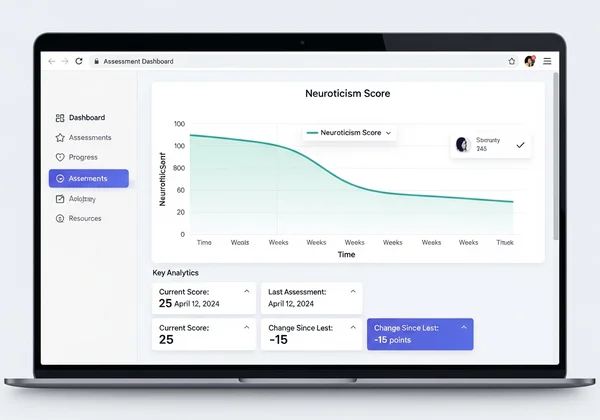
Re-taking the test every few months can provide objective feedback on your progress. It can validate your hard work and highlight areas where you’ve grown the most. This act of measuring reinforces your commitment and helps you stay motivated, turning your desire for change into a visible, trackable project.
Interpreting Score Changes and Celebrating Your Growth
When you re-take the assessment, focus on the overall trend rather than fixating on the exact number. A gradual decrease in your neuroticism score is a powerful indicator that your new habits are taking root.
Celebrate this progress! Acknowledge the effort you've put in. Growth is rarely a straight line; there will be ups and downs. The key is to recognize your forward momentum and use it as fuel to continue moving forward. Seeing a lower score can affirm that you are capable of change and in control of your emotional well-being.

Embrace Your Path to Greater Emotional Resilience
Reducing neuroticism and building emotional resilience is a process of self-discovery and consistent practice, not a one-time fix. The most important takeaway is that change is entirely possible. You have the power to reshape your emotional responses and cultivate a more peaceful inner world.
By combining mindful body practices, cognitive reframing, and strong social support, you can actively lower your sensitivity to stress and improve your overall well-being. Self-awareness is the catalyst for this transformation. Understanding your starting point is the first, most crucial step.
Ready to begin? Discover your unique emotional profile and empower your path toward greater stability. Start your free test today and take control of your emotional health.
Your Questions About Reducing Neuroticism Answered
Is it truly possible to significantly lower neuroticism over time?
Yes, absolutely. Research into neuroplasticity confirms that the brain can change throughout life. Stick with mindfulness, CBT, and healthy habits. You'll rewire your brain. Stress hits less hard, and calm sticks around.
How can I effectively calm down my neuroticism in daily life?
In moments of high stress or anxiety, focus on simple, grounding techniques. Practice deep, slow breathing—inhale for four counts, hold for four, and exhale for six. Another effective method is the 5-4-3-2-1 grounding exercise: name five things you can see, four things you can feel, three things you can hear, two things you can smell, and one thing you can taste. These actions pull your attention away from worry and back to the present moment.
What does a high neuroticism score indicate, and why might I seek to lower it?
High scores mean you're prone to anxiety, worry, sadness, and doubt. While this sensitivity can sometimes lead to greater preparedness and empathy, seeking to lower it can significantly improve your quality of life by reducing chronic stress, improving relationships, and increasing your overall resilience in the face of life's challenges.
How can this neuroticism test help me track my progress in reducing neuroticism?
Our platform provides a reliable tool to measure your starting point. The neuroticism assessment gives you a baseline score. As you practice the strategies for building emotional resilience, you can retake the test periodically to see how your score changes. This offers objective, motivating feedback that your efforts are making a real difference.
Is neuroticism the same as anxiety, or are they distinct?
They are closely related but distinct concepts. Neuroticism is a broad, long-term personality trait that describes a predisposition to experience negative emotions. Anxiety is a specific emotion characterized by feelings of tension and worried thoughts. A person with high neuroticism is more vulnerable to experiencing anxiety, but the trait itself is not the same as having an anxiety disorder.